"Your host and his/ her family will likely apologize for the food they are offering, saying that it isn't very much, its not tasty and they are sorry they couldn't give you anything. However, your eyes and mouth will quickly recognize this self- deprecating sweetness for what it is, as before you will be laid a near cornucopia of foodstuff, not to mention a wide variety of drinkable goodies. For example at one recent dinner, my friend and I were offered mango juice, apple juice, tea, butter tea, whiskey, vodka, homemade ara ( alcohol), and changkyer ( homemade alcohol served warm with egg and a little rice)."
Tuesday, January 22, 2013
Reading notes: Bhutanese hosts
This reading note comes from the wonderful blog, " A(nother) Year in Bhutan" by Ariana Maki , an art historian specializing in Bhutan and the Himalayas. She began the blog in 2009 when she was volunteering for the National Museum in Paro. The quoted section comes from a recent post about eating in Thimphu

Wednesday, January 16, 2013
Guest Post: " The Rice Incident"
This is a guest post by Carolyn Barnes who lived in eastern Bhutan with her husband, Jacob during the 2010/2011 school year. This wonderful story originally appeared on her own blog and she very kindly agreed to reboot it so I could share it here. For more of Carolyn's funny and smart observations you can follow her on twitter at @CBarnesAnthro
The cartoon was created by the multi-talented Bhutanese artist Pema Tshering who works in a large variety of mediums and styles including water color, film and most recently animations. You can follow his work on facebook

Living and Learning
In the summer of 2010, just after marrying, my husband Jacob and I set off for Eastern Bhutan. I took a position as a lecturer at Sherubtse College in Kanglung, while Jacob became a house-husband or, as he likes to joke, a “home minister.” After the initial elation of realizing that we were in Bhutan to stay, we of course had quite a serious bout of nervousness and homesickness. Arriving in the thick of the monsoon exacerbated our despair.
What was even worse about the monsoon rains was that they socially isolated us at the time when we needed to be out-and-about the most. We felt trapped inside our wet home and, when we were able to get out, we found that many of our neighbors were still on vacation and some of the shops were closed until students returned. Although we did what nesting we could and tried to get out and show our face around town, we were bitterly lonely...and damp.
Shopping was the real way we began to feel more established in the community, especially before I began working. Shopkeepers asked who we were, introduced themselves, and helped us find goods. They quite often were the ones who explained the ‘obvious things’ to us; the local knowledge about daily living that Bhutanese take for granted but that we remained clueless about. One of the ladies often explained to us how to prepare and cook produce we’d never seen before: how to trim and fry olo choto or make datse with fiddlehead ferns. Another explained the differences in the eggs imported from India and those produced in a big farm down in the valley. Yet another showed us how to charge our cell phone with credit and how to pick out the best passion fruits (yum!).
While very instructive, these first interactions were often awkward and uncomfortable for quite some time. I really worried we were bothering these people or that they’d think we were wasting their time with tedious questions. While this may have been the case, these early dealings were essential in introducing us to life in Kanglung. In particular, one humorous shop interaction from our first week in the village became quite the legend amongst our local friends.
The Rice Incident
One day the rains decided to subside for a bit, so we went shopping about 15 minutes up the highway in “Upper Market.” Having decided that we needed to buy rice to cook in our new rice cooker, we went into a shop and surveyed a small room of half-empty bags of grains sitting on the ground. The young shop-girl directed us to what was probably the most expensive and fancy rice in the store, saying that it would be “good for you.” Jacob examined it, rolling some of the grains in his hand before we confirmed that we’d take it. The price we paid seemed quite expensive, but we were newcomers and eager-to-please. As the shopkeeper girl hollered something at her mother in the next room, Jacob continued to examine the bag of rice, which was about 1/3 full, lifting it up and down to gauge its weight. I asked how heavy it was and if he thought we’d have a problem carrying it home.
As he was making this calculation, I noticed that a woman from the next room was in the process of hauling a HUGE, unopened bag of rice out to the front of the shop, at least 30 kgs with a big label that read “Rice Queen.” I quickly realized this was the bag of rice we had just purchased. While attempted to explain what I thought was happening to Jacob, and the young girl asked where the car was be taking the rice home in. We froze, absolutely flabbergasted. We just bought an inordinate amount of rice. How the hell were we ever going to eat it all? And, more importantly in that moment, how were we going to get it home?
I couldn’t even lift the bag off the ground. Poor Jacob hoisted the bag up on his shoulders, with the help of one incredibly strong lady and myself, hunched over and strained. He started waddling down the hill like a pack mule; sweat soon completely drenched his shirt and dripped off his bright red face. The old woman from the shop stood outside on the hill and watched for some time, giggling and shouting in Sharchop as we begin our descent (thank goodness it was a descent!). We had to stop every few minutes so Jacob could catch his breath, resting the rice on the concrete blocks to keep cars from flying off the steep sides of the road. People giggled as we slowly passed by. Jacob was focused on balancing the bag’s weight as he moved. I worthlessly fidgeted about him, tugging the bag one direction or another if he looked like he needed help. He ever so slowly stomped down the hill, his feet slamming on the pavement with the weight. At one point a few students who were back in town early came along and insisted on carrying it a little ways, also becoming drenched in sweat, before they had to go back up to their dorm (bless them!). Eventually we made it home with the ridiculous bag of rice.
This became a story we tell people over and over again, to which many a Bhutanese friends have slapped their knee and giggled, “You didn’t know you were buying the full bag?!” It has also become a way for us to explain how clueless we were in the beginning about the daily operations of just living life there; how much help and explanation we needed for what seemed to locals like the most basic task. One perplexed Bhutanese friend once asked, “Well, how do you buy rice at home?” perhaps assuming that we also consume huge quantities of rice at every meal. I then had to explain that we rarely ate rice at home and, if we wanted to buy it, it would be in much, much smaller quantities. He then said, in a soft and concerned tone, “Then, what do you eat?”
Much to our dismay, we finished that bag of rice before our year was over in Kanglung. But when we needed to purchase more, we only bought a few KGs at a time.
Wednesday, December 26, 2012
Swiss-ish Chrismas

Its also very much about food. Christmas is about a big family meal and its about cookies. Lots and lots of cookies that we inevitable feel, given that this is season of gifting, we have to give away. We try to look for recipes that remind us of the cookies our grandmother and Swiss aunties made for us and with us. This year we made three kinds(starting from the top left hand and moving clockwise), Mailanderli ( a sort of butter, sugar cookie with a touch of lemon) with marmalade centers, Zimsterne ( with lots of cinnamon and almonds) and Basler Burnsli ( with hazelnuts and chocolate).

We also tried to have a fancy dinner ( for us that means a tablecloth, non-plastic plates and glass of wine) which we attempted to make Swiss-ish but as you can see we also included chilli for those of us who can't do without it, even at Chrismas!


Friday, December 14, 2012
Hoentoe ( Buckwheat dumplings from Haa)
Earlier this week it was Lomba or New Year in the districts of Paro and Haa ( in fact this year it happened to fall on the auspicious date 12/12/12). Interestingly, while Losar is the official new years, there is a lot of variation in new year across the country. ( Here is an interesting article that describes some of the various new years across the country.) My immediate family is from central Bhutan so this is not my celebration but every year I hope that someone will share the amazing delicious buckwheat dumplings or Hoentoe that are an important part of the celebration. When my family lived in Bumthang, our neighbors were from Haa and so we were insured a supply of Hoentoe this time of year. This year it looked like we had missed the boat. But then a day later, our cousin's girlfriend who is from Paro had her father hand-deliver a bag of Hoentoe right to our doorstep! My sister quickly whipped up a batch of chilli paste to eat with the Hoentoe.

Hoentoe look very much like the more common Momo and are similarly steamed but there are very important differences. The first is that the outer wrap is made of buckwheat rather than flour and the second is that filling is tangy mixture of dried turnip leaves, chilli and fermented cheese. Very delicious.

As Bhutanese have become more mobile, living and working in districts that are not their own, many people from Haa and Paro will return home for their new year while others will make a huge batch of Hoentoe to share with friends, neighbors and co-workers. These are newer traditions that I adore!
We did very well with the batch we were gifted. Here is the final Hoentoe which was fought over ( I won!) .

PS If you are interested in learning more about Lomba, here is a post by a Bhutanese teacher explaining what Lomba means to him.
Friday, December 7, 2012
Reading Note: NPR on the dangers of Tea Drinking and Pressure Cookers
Recently I read two delightful articles on the NPR blog that discussed topics that have come up on this blog. The first was on the"dangers" of tea drinking for 19th Century Irish women. Apparently if "women had time to sit down and enjoy a tea break, this must mean they were ignoring their domestic duties and instead, perhaps, opening the door to political engagement or even rebellion."I am going to be thinking that as I savor my tea today! The second looked at pressure cookers and more specifically why they are less common in American kitchens.The great article includes some wonderful recipes to get first time pressure cooker users started as well as this lovely line describing the sound that a pressure cooker makes as it warms up, " wheezing like an asthmatic cobra." I have never ever actually heard an asthmatic cobra but it does convey how dangerous a pressure cooker can sound when its in action .
Wednesday, November 28, 2012
Reading Notes: Rice, rice and more rice!
From" Foods of the Kingdom of Bhutan" by Ernest T. Nagamatsu and Erik Nagamatsu
( Winner Best Asian Cuisine Cookbook at the 2011World Cookbook Awards in Paris)
And for a little more on red rice, this interesting article from an Indian publication about red rice growing in Kerala.
( Winner Best Asian Cuisine Cookbook at the 2011World Cookbook Awards in Paris)
" The Bhutanese make generous use of rice, enjoying it in desserts and snacks as well as in main dishes ( though desserts are usually local fruit mixed with fresh cream). They cook with either white polished rice ( ja chum) or the well-known red rice ( eue chum) of Bhutan, the best of which is grown in Punakha, located in a fertile valley east of Thimphu. The red rice which is fluffy, aromatic and pinkish in hue, tastes mildly nutty. "
And for a little more on red rice, this interesting article from an Indian publication about red rice growing in Kerala.
Monday, November 19, 2012
Time for tea: Suja Desi
 We drink a lot of tea in Bhutan. A lot. Its both an everyday beverage and a drink that has an important place on special occasions. If you show up at some one's house, you will be offered a cup of tea. When we have Bhutanese guests for dinner my mother makes sure that we have tea ready for them BEFORE the meal. One of my all time favorite, old time-y customs is bed tea. What an indulgence to be brought your first cup of tea when you are still in bed, only half awake!
So its perhaps no surprise that tea is also featured in our religious events. Recently my family hosted a blessing ceremony for a new business venture. It was just a small ceremony held on a weekday morning in my parents' living room. At some point during the proceedings tea and desi must be served to the monks who are performing the blessing ceremony. It was also a great opportunity for me to document the preparation and serving of suja desi or butter tea and savory buttered rice. A combination which is served at all kinds of special and religious events from weddings to blessing ceremonies like this to high level official events. I think the common element here is lots and lots of butter! Here is the massive block of Bhutanese butter that we chipped away at all morning as we prepared the tea and rice for the ceremony!
Suja or butter tea is a distinctive Himalayan drink. Its basically made by churning brewed tea with butter and salt. If you are new to it and expecting sweet tea, it can be a bit of a rude shock. The saltiness! The oil! I always tell people its best to think of it as a soup. And on a cold, cold day there is nothing more wonderful then a steaming hot cup of butter tea.
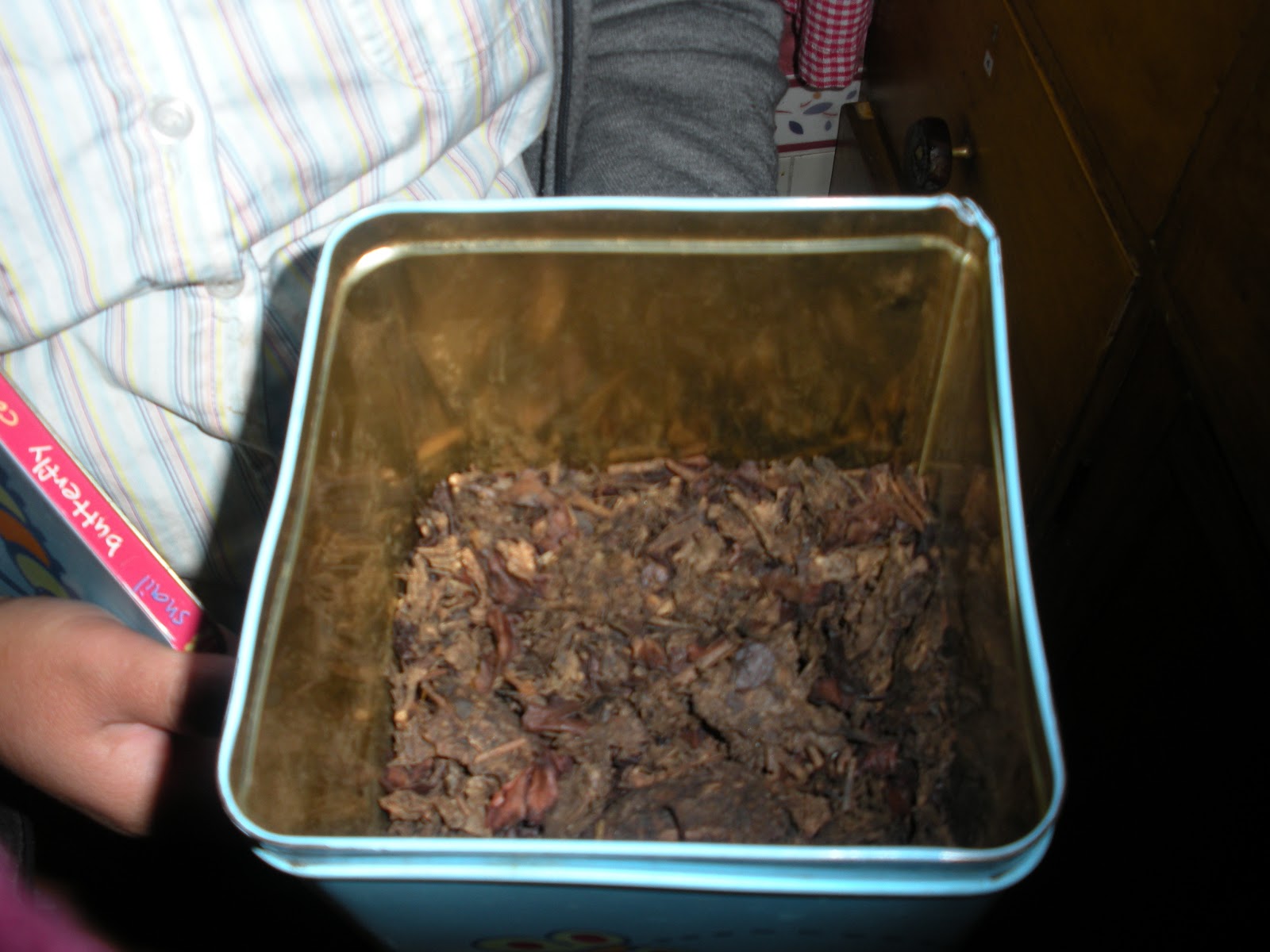
To make the tea, loose black tea leaves are mixed with cold water and brought to a boil. A tiny amount of bicarbonate soda is added (to enhance both the taste and color) , then the hot mixture has salt and butter added to it and is churned and churned and churned ( the churn looks a lot like an old fashion butter churn) until its a consistently creamy brown shade . Of course the oil of the butter has a tendency to rise to the top, so with each refill the kettle is gently shaken up to redistribute the butter.

These days we use an electrical mixer rather then a churn and my mother, with an eye on the family's cholesterol in-take sometimes mixes in milk so that she can cut back on amount of butter we are drinking. However on the day of the blessing we went all butter !
Desi or the butter rice can be made sweet or savory. The base ingredients are rice, saffron and butter. Then you can either add chopped green chilli or to make it sweet, raisins, nuts and a little sugar. We went savory. Personally I am not such a fan of sweet desi so I was happy with that choice.


The saffron, butter and chilli are added once the rice is cooked and just mixed in. As you can see we went ahead and added them to the cooked rice in the rice cooker. That has the additional benefit of keeping the desi warm.

Here is the suja and desi being served out for the monk who officiated the blessing. My mother even managed to find a fancy tray to serve him on. Of course the best part of the ceremony is when we get our share of suja and desi.

Its not strictly food related, but I really thought the altar that was set up in the living room with offerings of water, flowers and fruits was rather beautiful. Perhaps you can guess the business venture that the blessing ceremony was conducted for?


Subscribe to:
Posts (Atom)