Saturday, July 27, 2013

Dried Chilies ( Long overdue post #2)

Bhutanese famously think of chilies as a vegetable and not a spice, every meal requires them.  Unsurprisingly chilies are grown in every single district or dzongkhag in Bhutan, thought of course as this article put out by the agriculture ministry points out, climate and elevation differences mean that there is necessarily a lot of variety in the types of chilies grown. Chilies are grown both for personal family consumption and to sell in the local market. 


Unsurprisingly chili is one of the most commonly dried "vegetables" in Bhutan. In the past when transporting vegetables was difficult this was an important way of insuring a year long supply. Times have changed and fresh chilies are available year long but Bhutanese still choose to dry some of their supply.

According to Kunzang Choden in her  book " Chilli and Cheese: Foods and Society in Bhutan" sun drying is still the most common way to dry chilies. She also make the following observations about the colors of dried chilies  :
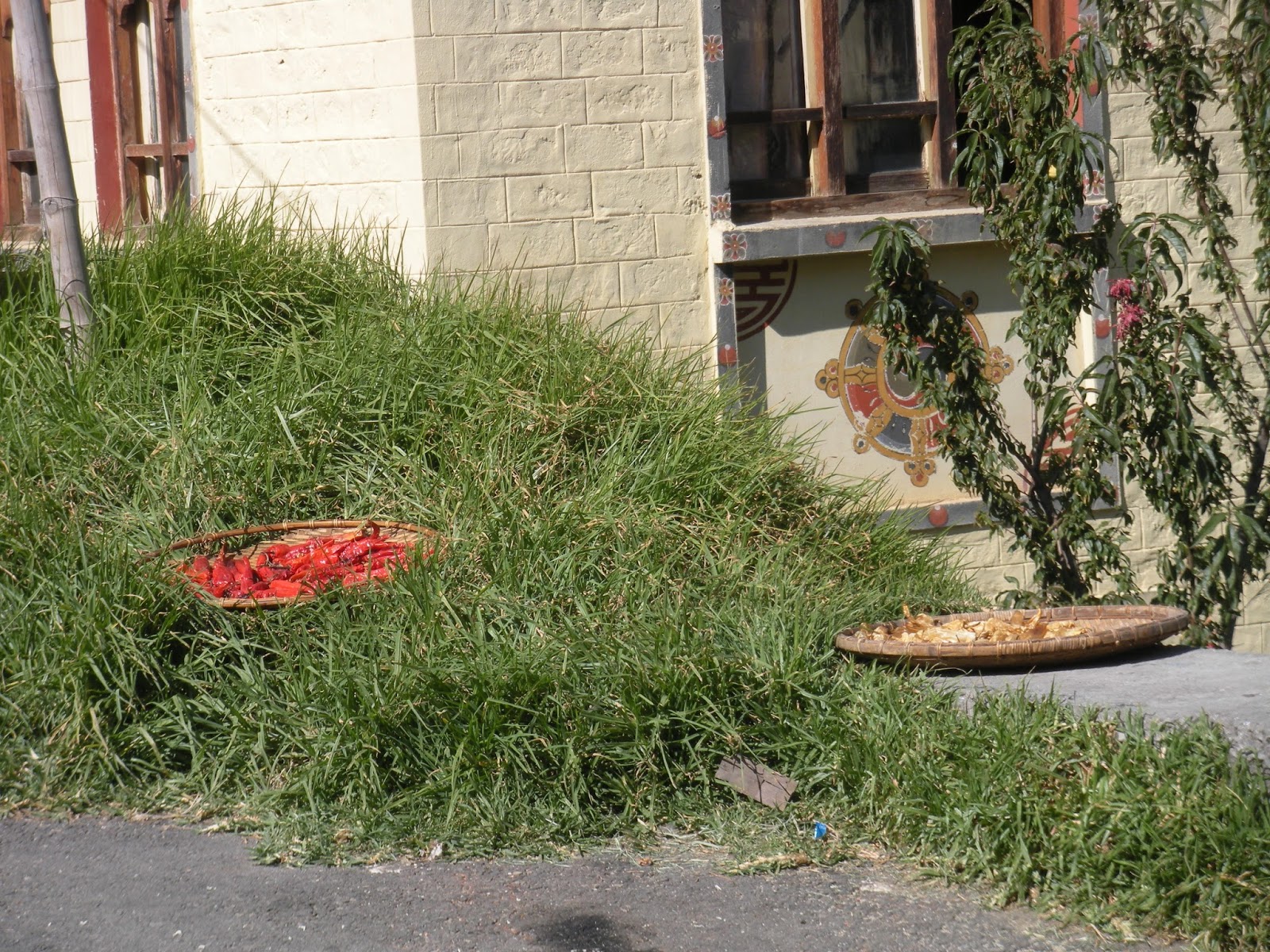
"Mature chilies, which begin to get a tinge of red coloration, easily turn read when sun dried. Green chilies split in half and sun dried retain their color so they are green even when dried. The biggest chilies are selected and blanched by immersing them  for some minuets in a pot of boiling water and then drying them in the sun. These chilies become a yellowish creamy color when dried and are known as shur kam ( boiled and dried or white chilies).   The colored chilies preserved in different ways not only add color to the dishes but also widen the possibilities of different tastes and textures." 

Below are some picture I took in the fall and winter of chilies being dried in my own neighborhood.




Saturday, July 20, 2013

Dried Meat ( long over due post #1)

It's July, summer holidays and at long last I have time to catch up on some of the posts that I had planned to do ages ago. This post on dried meat has been waiting since the winter!


Thimphu winters are typically dry and cold. There might be some early morning frost, even the occasional snow but in general winter is a very dry time.  Many Thimphu residents take full advantage of this dryness.  Strings of meat and chili hung out on washing lines, on balconies and out of windows are a familiar sight all over the city during this time of year. 


I love that in an age where most urban middle class families have fridges  and there is a reliable weekly market with fresh vegetables that people still spend time and energy preparing vegetables and meat to dry. 


Our family bought a leg of beef to dry this winter. The meat has to be cut into long narrow stripes and then hung out to dry. Its actually easier to do this messy work outdoors. Below is a family friend who  helped us cut our meat up this year. You can see that we just lay out a plastic sheet and did the chopping mostly  without a cutting board 


We did have some very interested observers. Here is our ( greedy) family dog, eagerly and carefully watching the work being done. Don't worry he got his share of the bones!


And here is the final product hung out to dry. The meat takes several days to dry so at night we have to cover it all and guard it from birds, dogs and cats. Sadly this year we had actual human thieves come and steal a portion of our meat overnight and then our clever cat got into our storage and ate the rest of it.


So how do we eat the dry meat? It came be cut up and eaten as is, often with a chili paste. Growing up my all time favorite breakfast was " Bhutanese breakfast" -- Suja ( butter tea), rice, ezay ( chili paste) and shakam ( dried meat) that had been lightly roasted usually over an open flame.  More often however  we cook it with vegetables ( like dried turnip leaves ) and chili as show in the picture below. 


Saturday, July 6, 2013

Meat Buffet at a Bhutanese Wedding.


Recently I was invited to a wedding in Paro that had the most impressive meat buffet. Unlike a lot of fancy weddings and events that I have been to lately the family didn't cater the event instead they did it the old fashion way and got together to cook up the feast. And what a wonderful old fashion feast it was! And of course a "typical" Bhutanese celebratory feast means meat, meat and more meat!  

Here are two photos of the meat aisle taken from either end to give you a sense of the spread. 


Many of the preparations and even types of meat on offer were old fashion. Each is considered a delicacy and treat. For example below is tripe or stomach lining. It has rubbery texture that I don't enjoy.


Here is one of my favorites, blood sausage fried with chill and other spices. Incredibly dense and rich.


Liver- prepared with a lot of oil and a lot of spice, also very rich.


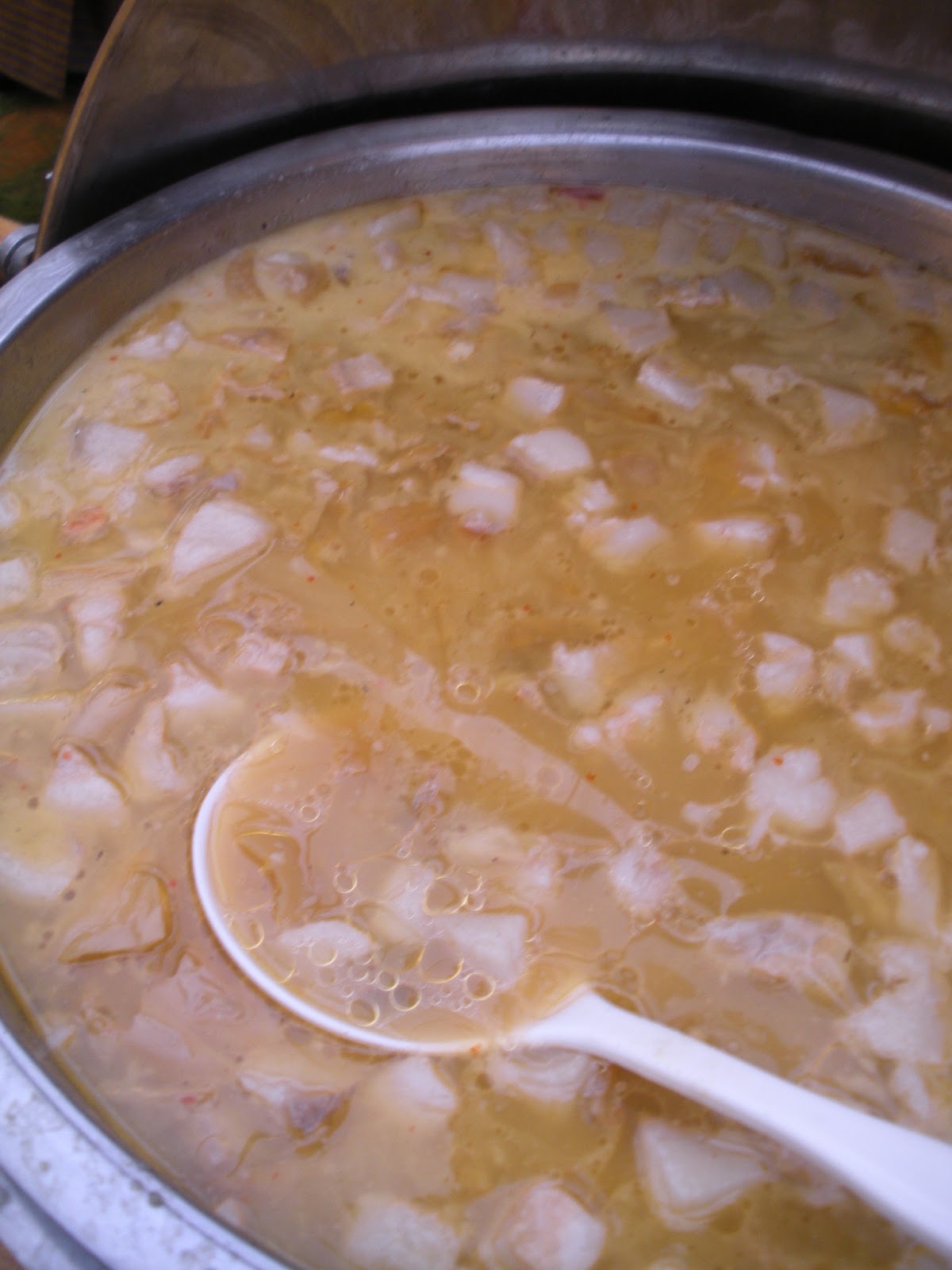
A pork stew-ish dish. Yes those floating white pieces are pork fat. Bhutanese love pork with a layer of fat.


Since it was a summer wedding, the flies were very much in attendance. One member of the family just stood near the food swotting them away with yak tail fly swotter. Surprisingly effective!


Despite eating more of the meat then I should have, I managed to save room for the beautiful and very tasty cake baked by a cousin of the groom, who owns a cafe/ bakery in Paro called Tshernyoen. 


Saturday, June 22, 2013

Reading Note: Picnicking

As the weather warms up eating outdoors is such a treat ( except when it rains but that is another story). My family frequently eats outside this time of year, surrounded my mother's beautiful garden and at work we tend to gravitate to the tables outdoors at the campus canteen.  So of course this interesting post on NPR food blog, The Salt, on the history of picnicking was well timed!

What was perhaps most interesting part of the article was learning that picnic starts as something the wealthy indulged in. These early picnics required servants and nice linen, a "movable feast" more than roughing it out in nature and eating out of sandwiches out of plastic containers.

In fact they sound an awful lot like modern Bhutanese picnics where people tend to bring their pots and pans and actually cook out in the open. And the food is always special occasion food made for a large number of people.  I was once told by a group of  students horrified by my suggestion that we save money by making sandwiches, that there was no point going on a picnic if there wasn't meat and if it wasn't grand. Here is a picture of me at that picnic where my students cooked up  the most delicious feast.


Sunday, June 16, 2013

Reading Notes: Portraits of grandmothers and their signature dish.


So, the blog Jezebel had a lovely post recently about a photography book focused on grandmothers from 58 different countries posing with their signature home cooked meal. The book was put together by photographer Gabriele Galimberti, the man behind the riveting photo essay of children around the world posing with their most prized possessions. Apparently he was inspired by his own grandmother's ravioli.

Scrolling through a more complete sample of his photos I am struck by how few of the dishes are familiar to me ( I admittedly plan to stay unfamiliar with the Caterpillar in tomato sauce!)  However what is perhaps most interesting to me is that glimpse these photos give into the kitchen where these women work their magic.

My Bhutanese grandmother died before we were born but my Swiss grandmother cooked many wonderful meals for us.  Our least favorite was probably cow tongue, which was baked whole and looked very much like a cow tongue even as she sliced it up for us.

Saturday, June 1, 2013

Fresh from the garden!


Reading Notes : Six Basic Tastes of Tibetan Medicine

From : " Tibetan Medical Dietary Book: Vol 1 Potency & Preparation of Vegetables" by Dr. Yangbum Gyal, Clinical Research Department  Men- Tsee- Khang ( Tibetan Medical and Astrological Institute of H.H., the Dalai Lama)


Sweet: Something that is tasty and clings to your mouth and make you want more like sugar, candy, cookies , ice cream, grapes, molasses, honey, etc.
Sour: Something that set the teeth on edge , pucker the face and make the mouth watery when it touches the tongue like lemon, orange, Kyuru ( Emblica officinalis), seabuck thron, raw grapes, curd, butter milk, etc. 
Salty:  It creates hot sensation and produces saliva when it touches the tongue. For e.g., salt, natron, etc.
Bitter: It taste bitter, clears the foul mouth smell and does not want to taste more when anything bitter touches the tongue. For e.g. Bitter gourd, dandelion, coffee, etc
Hot:  Something that burns the mouth, oozes out tears and produce heat when it touches the tongue, like chili, garlic, onion, Gingiber officinale, Piper longum etc.
Astringent: Something that give a weak sense of taste and sticks to the tongue and palate when in touches the tongue like, raw banana.